
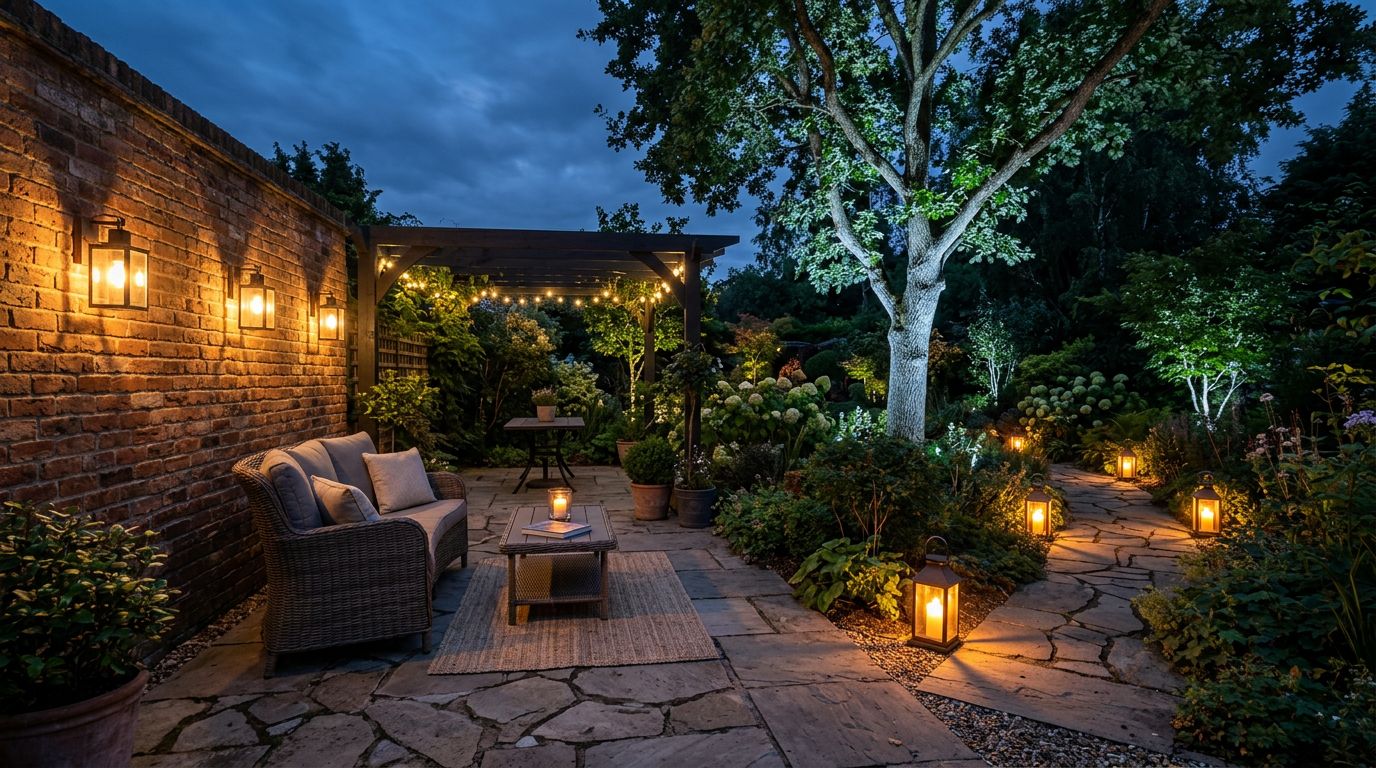
When it comes to outdoor lighting, most people focus on brightness and placement. But there is one factor that quietly makes or breaks the whole look: color temperature. Getting the right color temperature for outdoor lighting is the difference between a warm, welcoming home and a harsh, sterile one. At SoHo Trimlight LLC, we help homeowners across the Houston area dial in the perfect glow for every space.
In this 2026 guide, we will break down exactly what color temperature means, which Kelvin ranges work best outdoors, and how to match the right light to each part of your property. Whether you are lighting a garden path or securing a backyard, this guide will help you make smart choices.
What Is Color Temperature in Outdoor Lighting
Color temperature describes how warm or cool a light appears to the eye. It is measured in Kelvin, often shown as a number followed by the letter K. Lower numbers give off a warm, yellow-orange glow. Higher numbers push toward a crisp, blue-white light. This has NOTHING to do with how hot a bulb feels. It is purely about the color you see.
Understanding this scale helps you pick lights that fit the mood you want. A cozy patio needs a very different temperature than a bright driveway or a security floodlight. Here is a quick breakdown of the common ranges you will see.
- 1800K to 2200K: Very warm, almost candle-like. Great for ambient accent glow.
- 2700K to 3000K: Warm white. Soft and inviting, similar to a classic incandescent bulb.
- 3500K to 4000K: Neutral white. Balanced and clean without feeling cold.
- 5000K to 6500K: Cool white and daylight. Bright, sharp, and best for visibility.
What Kelvin Range Is Best for Outdoor Lighting
There is no single "best" Kelvin range for every situation. The right choice depends on the job the light is doing. That said, most residential outdoor lighting looks its best in the warmer ranges. Warm light flatters brick, stone, wood, and greenery. Cooler light tends to feel more industrial or commercial. Below we break down the ranges that work best for different needs.
Warm White (2700K to 3000K)
This is the sweet spot for home exteriors. It creates a comfortable, upscale look that pairs well with landscaping and architecture. Most of our residential clients love this range for front yards and entryways.
Neutral White (3500K to 4000K)
Neutral white is a solid middle ground. It stays bright enough for visibility while avoiding the harsh feel of pure daylight. It works well for driveways, garages, and larger open areas.
Cool White and Daylight (5000K and Up)
These cooler tones are best reserved for tasks where safety and clarity matter most. Think floodlights, motion sensors, and commercial spaces. They feel bright and alert, which is exactly what you want for protection.
How to Choose the Right Color Temperature for Each Outdoor Space
Every part of your property has a purpose, so the lighting should match. Mixing temperatures thoughtfully can create depth, but mixing them randomly usually looks messy. Here is how we approach the most common outdoor areas.
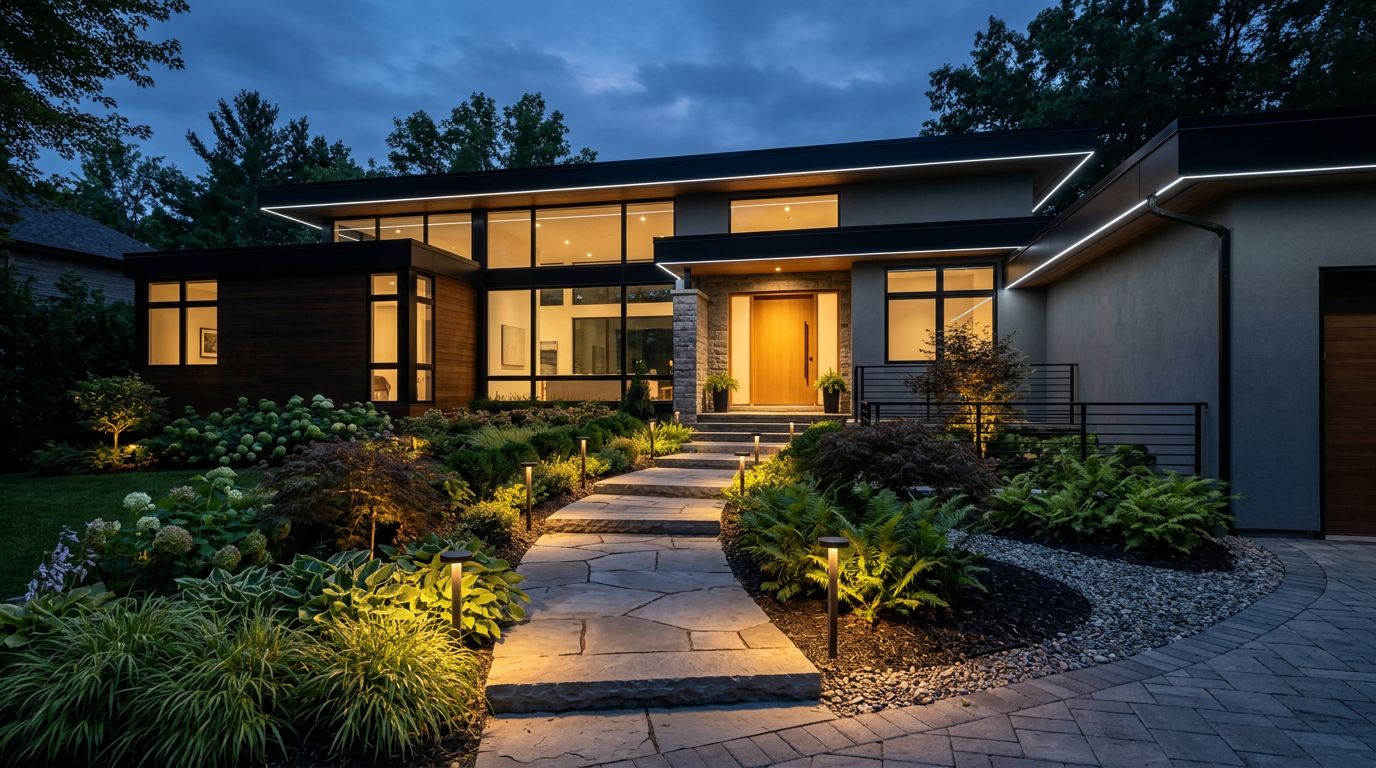
Front Entry and Facade
Stick with warm white in the 2700K to 3000K range. This is the first thing guests see, and warm light makes your home feel welcoming and high-end. It also brings out the natural colors in stone and siding.
Garden Beds and Trees
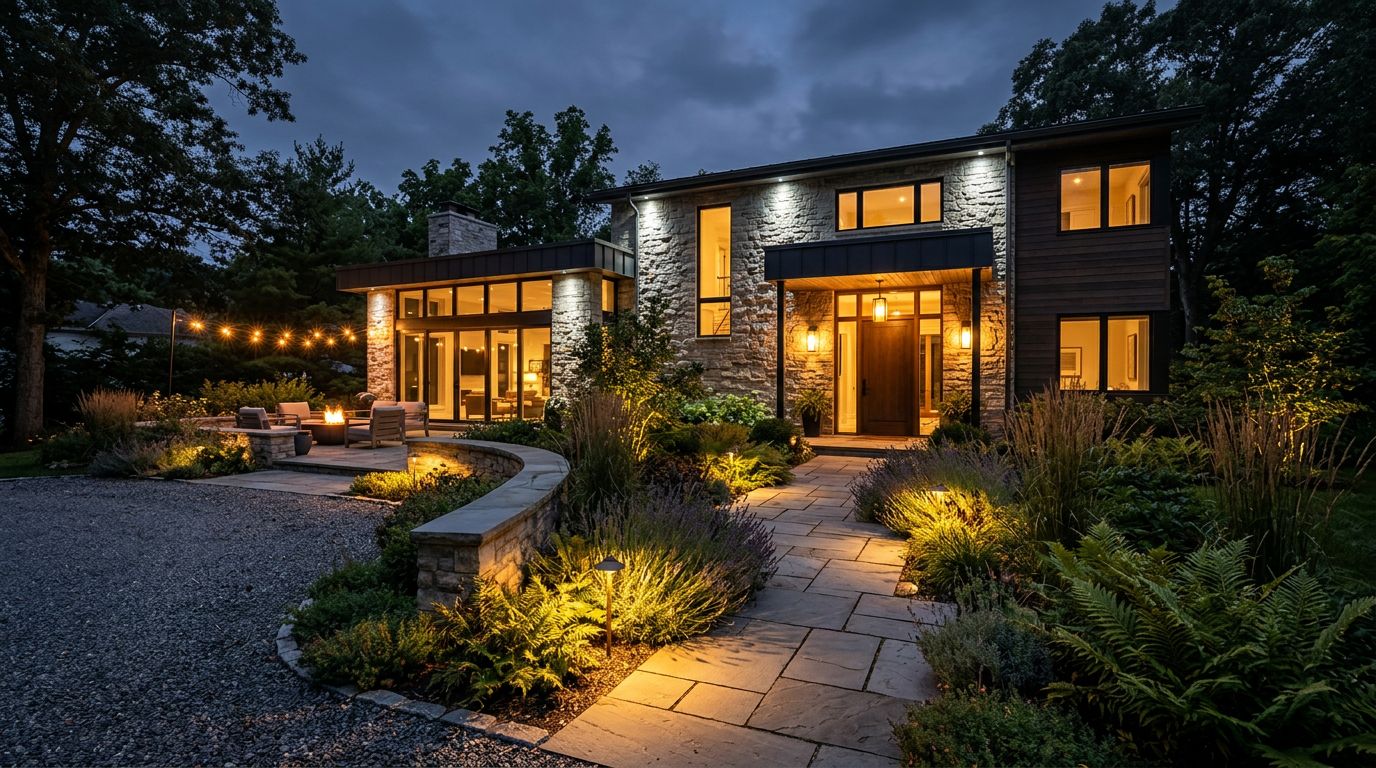
Warm tones shine here too. Soft 2700K light makes plants and foliage look lush and rich. If you want your greenery to pop after dark, our approach to professional landscape lighting keeps colors natural and inviting rather than washed out.
Patios and Outdoor Living Areas
These spaces are all about comfort. Go warm, around 2200K to 2700K, to create a relaxing lounge feel. Nobody wants to unwind under a bright blue-white glow.
Driveways and Walkways
Here you can bump up to neutral white in the 3000K to 4000K range. You want good visibility for safe footing, but you do not need harsh daylight tones.
Security Zones
Cooler light in the 5000K range works best for security. It maximizes visibility and makes cameras record clearer footage at night.
Warm White vs Cool White vs Daylight for Outdoor Use
People often confuse these three categories, so let us put them side by side. Warm white feels cozy. Cool white feels clean and modern. Daylight feels bright and functional. Each has a time and place outdoors. The table below shows how they compare across the factors that matter most.
| Feature | Warm White (2700K-3000K) | Cool White (4000K-5000K) | Daylight (5500K-6500K) |
|---|---|---|---|
| Mood | Cozy and inviting | Clean and crisp | Bright and alert |
| Best Use | Entryways, patios, gardens | Driveways, garages | Security, floodlights |
| Curb Appeal | Excellent | Moderate | Low |
| Visibility | Good | Very good | Best |
| Feel | Residential | Modern | Commercial |
For most homes, warm white wins for the main living and entry areas. Save the cooler tones for practical tasks. If you want to highlight architectural details or artwork outdoors, our take on custom accent lighting shows how the right temperature can draw the eye exactly where you want it.
How Color Temperature Affects Curb Appeal and Safety
Color temperature does more than set a mood. It directly impacts how attractive your home looks AND how safe it feels. Warm light boosts curb appeal because it flatters materials and creates that inviting glow buyers and guests love. Cooler light boosts safety because it improves contrast and visibility. The key is knowing when to use each. Balance is everything.
When you invest in reliable security lighting, cooler temperatures help you spot movement and record clear video. But for the parts of your home meant to welcome people, warmth always wins. Here are the main ways color temperature shapes both curb appeal and safety.
- First impressions: Warm light makes a home look expensive and cared for.
- Material accuracy: Warm tones bring out true colors in brick, wood, and stone.
- Depth and dimension: Mixing temperatures adds layers to a lighting design.
- Nighttime visibility: Cooler light improves how well you see steps and pathways.
- Camera clarity: Daylight-range light captures sharper security footage.
- Deterrence: Bright, cool floodlights discourage unwanted visitors.
Common Outdoor Lighting Color Temperature Mistakes to Avoid
We see the same mistakes over and over when homeowners try to light their properties. The good news is that all of them are easy to avoid once you know what to look for. A little planning saves you from a yard that looks disjointed or a facade that feels cold. Here are the biggest slip-ups to steer clear of in 2026.
- Mixing temperatures randomly. Using 2700K in one spot and 5000K right next to it creates a patchy, confusing look. Keep zones consistent.
- Going too cool on the house. Blue-white light on a home facade looks harsh and cheap. Warm tones almost always look better up front.
- Ignoring the landscaping. Cool light drains the color from plants. Warm light keeps your greenery looking alive.
- Overlighting security areas. Blasting every corner with daylight floods creates harsh glare and dark shadows. Aim strategically.
- Forgetting about neighbors. Extremely cool, bright lights can spill onto other properties and feel invasive.
- Skipping dimmable options. Fixed brightness limits your flexibility. Adjustable systems let you set the mood for any occasion.
- Choosing bulbs by wattage alone. Wattage tells you energy use, not color. Always check the Kelvin rating before you buy.
Avoiding these mistakes keeps your outdoor lighting looking polished and intentional. When in doubt, lean warm for beauty and cool for function. That simple rule covers most situations.
Conclusion
Color temperature is the secret ingredient behind great outdoor lighting. Warm white in the 2700K to 3000K range makes your home feel inviting and boosts curb appeal. Neutral white handles driveways and walkways with balanced visibility. Cooler daylight tones belong in security zones where clarity matters most. Get these zones right and your property will look stunning while staying safe after dark.
At SoHo Trimlight LLC, we help homeowners in League City, Texas City, Friendswood, Dickinson, Santa Fe, Clear Lake, and Nassau Bay design lighting that fits every space perfectly. If you are ready to transform your outdoor spaces with the right color temperature, reach out to our team and let us build a plan that fits your home.